Remembering Hurricane Gilbert: A Story of Loss and Unity

It was Sunday afternoon, September 11, 1988. I remember it as though it were yesterday. I was sitting at home in Kingston, watching television. A typical quiet Sunday with no sense that anything was about to change. A neighbor stopped by, on the way from church, and there was something different in her voice. She said she had passed a long line at the shop down the road, people stocking up on food, water, and supplies. Curious, she had asked what was happening, and the answer startled her: a hurricane was coming. That was the first I heard of it. I hadn’t caught a whisper of warning before then. Only after she said it did I switch on the radio, and there it was, urgent and unrelenting. Hurricane Gilbert was approaching Jamaica. I scrambled to prepare, buying what I could. Canned and dry food. Candles and batteries for the flashlights. I did not have bottled water back in the day, so I filled all the containers I had, both for drinking and for domestic activities. Bathing and washing. Would I be prepared enough? It seemed Gilbert was shaping up to be a serious one.

The next day, Monday, September 12, around midday, Gilbert arrived. At first, it was hardly impressive. Just a whimper of wind against the house. A kind of restless breeze that made me wonder if the warnings were exaggerated. But soon, the storm began to build. The wooden louvres downstairs started flexing in and out as though they were breathing. Through the crack of the door, I saw tall trees bending, swaying, and then snapping like matchsticks. The sound of it stays with me even now: wood breaking, zinc screeching, the howl of a wind that seemed determined to tear everything down. Gilbert came ashore with sustained winds of over 125 miles per hour, a Category 3 hurricane, and unlike some other storms that brush one corner of the island now and again, this one crossed the entire length of Jamaica. The eye carved a path from east to west, leaving no parish untouched.
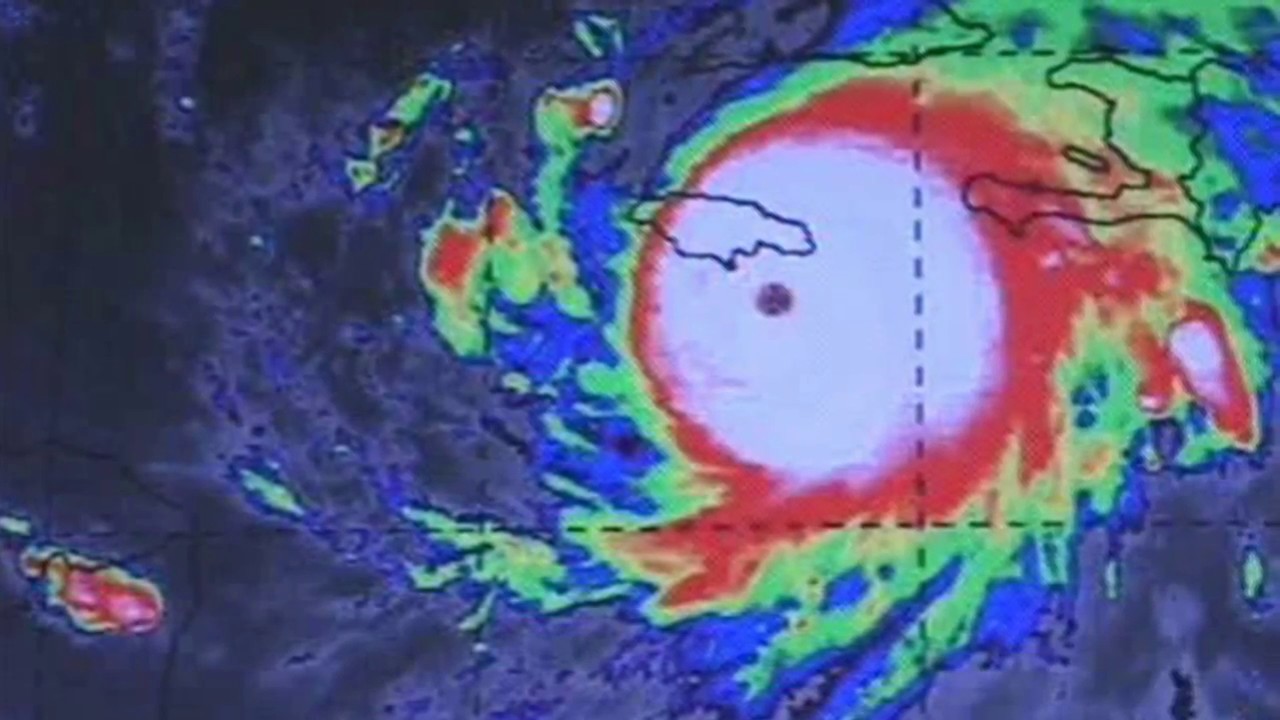
The storm raged for what felt like hours, though I suppose it was only two or so. Then came a sudden stillness. The winds dropped, the rain stopped, and the world outside was strangely a dull kind of bright. I stepped out into the eye of the storm, bolstered the door and windows again, and walked out from Wiggan Loop down Barbican Road. Neighbors were all milling around. Already, roofs were gone. Houses torn open. Trees scattered across the road. And even in the midst of it, Jamaicans found a way to laugh. We joked about the shiny cars sitting in open garages where the roofs had vanished, cars polished and gleaming but now utterly exposed. It was absurd, and maybe laughter was our way of keeping fear at bay. Crying would have done nothing to stop the storm. But the calm was only temporary. Slowly, the winds began to stir again, this time from the opposite direction, and before long, the second half of Gilbert was upon us. Stronger, fiercer, more brutal than before, the storm howled through the night. Zinc sheets became blades, slicing through the sky. Trees that had survived the first battering toppled under the second. The windows battled against the force of the wind, and I held my breath, waiting for the storm to pass.

By morning, Jamaica was a different place. When I stepped outside, the air itself felt sharper, and the light seemed almost too bright. With so many trees gone, the sky poured down unfiltered, and from my vantage point, it was like I could see clear toward downtown Kingston if I looked hard enough. But, in all, it was a view I had never had before. People wandered the streets in disbelief, greeting neighbors, surveying the damage. Gilbert left behind destruction on a scale few had ever seen. Almost 50 Jamaicans had lost their lives. Entire communities were flattened, banana fields destroyed, coconut groves and sugar crops wiped out. The official figures would later say the damage in Jamaica alone exceeded millions of dollars, but the real cost was written in grief, in broken homes, in lives forever changed.

Survival in the days afterward was its own battle. There was no electricity, no running water, no phones. I lived on canned food, growing tired of the taste but knowing it was all I had. I nursed the water I had, hoping not to run out of it too quickly, for fear of not easily finding fresh supplies. The roads were blocked, so I had no way to reach my family in St. Thomas. For three long days, I knew nothing. Only waiting and wondering if they were alive. But I had faith. At last, a high school friend who had made it through Yallahs into Morant Bay carried the news that I needed. My parents, brothers, sisters, nieces, and nephews were all safe, it seemed. Relief flooded through me. But joy was tempered by loss. My maternal grandmother, who lived alone in Kingston, never came back after Gilbert. She hadn’t gone to St. Thomas or to a sister who also lived in Kingston. And none of her church sisters had seen her. Thirty-seven years later, we still don’t know exactly what happened to her.

The irony is bitter. My grandmother had survived another hurricane exactly 37 years before Gilbert. Hurricane Charlie, which hit Jamaica in 1951, was one that I grew up hearing about. How devasting it was. At that time, my mother had two infant sons, my eldest siblings, and all four of them lived together in a small wooden house in Kingston. My mother told me that when the wind started to pick up, she clutched the children and stepped out into the storm to find shelter, as she feared the walls of the little house were going to buckle. At first, her mother had refused to leave, but she followed her and the kids, stumbling through the howling wind and pounding rain, until they found shelter. By the next morning, their house was flattened. But she and the kids survived. Her mother, my grandmother, survived, too. Yet, 37 years later, almost to the day, Gilbert took my grandmother. I remember watching my mother one day, a few short years afterward, staring into the distance, a single tear slipping down her cheek. When I asked what was wrong, she softly whispered that she was thinking about her mother. I feel she carried that grief until her death in 1994, six years after Gilbert, and I believe she left this world with a broken heart. But I also believe that somewhere beyond the reach of storms, they are reunited, together again.

What stays with me about Gilbert is not only the devastation but the spirit of the people who endured it. We laughed in the face of flying zinc and fallen trees, because laughter was our shield. We shared what we had when supplies were scarce, because community was the only way through. Gilbert was a storm that stripped Jamaica bare, but it also revealed our resilience. Thirty-seven years later, I can still hear the winds in my mind, still see the brightness of that first morning after. Still remember the silence of waiting for news. Gilbert is more than a memory of destruction; it is a reminder of how fragile life is, how much family means, and how Jamaicans, no matter what comes, always find a way to endure. And a constant reminder of my grandmother.

Paying it Back, Paying it Forward…

We were driving together from somewhere in Miami back to home in Miramar. My dad and I. Henry. He was visiting from Jamaica. I cannot remember precisely why we had gone down to Miami, but we decided to make a pit stop during the return leg for a quick bite. Surely, food was at home, and though I knew I would have to explain to my wife why we didn’t wait, I told myself I would take the chance. What the heck? It would give us time to sit and chat while filling our bellies. Oh, we could check out a newly opened KFC restaurant somewhere off University Drive. The taste would not be the same as back home in Jamaica, but we would make it work.

As we pulled into the parking lot, I noticed a woman sitting in a car by a tree. A ton of stuff piled on the seats behind her and the passenger side up front. Just a fleeting observation. I didn’t take a second look to try and figure out what was going on. Plus, she looked like she was trying to make herself invisible. Despite that, I caught her glancing our way. But I didn’t think much of it either. We were just peckish and wanted to go and eat.

Inside, the place wasn’t too crowded. We joined the short line to order our food. What should we get? Should we get a big bucket of chicken so we could take some home? How about sandwiches and fries? Or maybe some original pieces instead of sandwiches? A few seconds into our pondering, the same woman from the parking lot walked in. She looked around nervously before heading straight for us. Her eyes darted between me and Dad and then settled on me.

“Excuse me,” she said softly. “Could you get me something to eat?”

I looked at her closely. She seemed exhausted, worn down by life.

“Of course,” I said. “What would you like?”

She hesitated. “I… I’ve been living in my car,” she explained, her voice barely above a whisper. “I’ve fallen on hard times. I’m diabetic and haven’t eaten all morning. I’ve been sitting in my car, trying to work up the courage to ask someone for help. And when I saw you with this gentleman I assumed was your dad, I don’t know… something about your spirit. I felt like you were the one I should ask.”

I felt a lump in my throat. “You can order anything you want,” I told her. “But keep in mind your diabetes.”

She looked at me, her eyes full of uncertainty. “Could you order for me?” she asked. “I’ll accept whatever you choose, no matter how small.”

I could see she was afraid to ask for too much. “Go ahead,” I insisted. “Get something that’ll fill you up.”

She finally ordered a regular meal, probably still worried about asking for too much. I thought to myself, if I were in her shoes, I’d have ordered something more substantial.

I ordered everything for all three of us and paid. When the food came, I handed her hers, and she took it with both hands, holding it like it was the most precious thing in the world. “Thank you,” she said, her voice full of gratitude. “I’m going back to my car to eat.”

“No problem,” I replied. “Take care of yourself.” 

Henry and I finished our meal, talking about everything and nothing. When we got back to our car, I saw her still sitting in hers, eating slowly. She looked up when she saw us, smiled, and waved. I could see her mouth the words, “Thank you.”

We waved back. As we pulled out of the parking lot, I couldn’t help but feel a mix of emotions. Sadness for her situation, but also a strange sense of peace. Dad turned to me and said, “You did good, son.”

“Thanks, Dad,” I said. “Just trying to do the right thing.”

We drove on home. Later in bed, I reminisced about what had transpired at the KFC store. Needing and not having is not a nice thing. It made me think about one of my life’s philosophies: We all have only one life as we know it and want to live the best possible. It behooves me to reach out and help someone else, no matter how insignificant it may seem, to live their best life. Hunger is a need that is not nice if you cannot satisfy it. I know, because I have been there many times back in the day when I left my parents’ home to Kingston to attend university. But that’s another story for another time.

My reminiscing made me think of my mother. It is hard not to think about her when you grow up with someone so selfless. Someone who seemed to be guided by an invisible force that always knew the right thing to do. She made you feel like everything would be okay, no matter how little we had. Perhaps I got my philosophy of looking out for my fellow man from her. Let me tell you a little story about her. Her name was Lillian.

Growing up in Norris, a small, rural part of St. Thomas in eastern Jamaica, wasn’t always easy, but she made it work to the point where we felt normal. And it was the same for all my friends in the neighborhood. When we talk among ourselves now, we realize that life was not easy back then. But, to us, it was normal. We did not know anything else. Even today, we feel we had the best life!  

In Norris and the surrounding districts, there wasn’t much public transportation back in the day, so people often had to walk miles to get anywhere. Our yard was like a little oasis. We had these big, cooling mango and breadfruit trees that cast a comforting shade. We had a pipe with cool, running water underneath a giant breadfruit tree, next to an orange tree. People walking the long roads in the hot sun would stop by our yard to rest and catch their breath. And when they did, my mother would always ask if they needed anything. Some would even pre-empt her and ask, “Miss Lil, you have anything can eat deh?” And she’d always have something to offer.

It never ceased to amaze me how she did it. Some mornings, she’d say, “I don’t know what we’re going to eat today.” But then, as if by some miracle, when someone stopped by, she’d make food appear out of nowhere. A little bit of rice, some greens, a piece of bread and butter—whatever we had, she’d share it. I’d watch her, this quiet magic unfolding in our kitchen, the way she’d move so quickly and calmly, pulling together some bickle from seemingly nothing.

I used to wonder how she did it and where this endless generosity came from. But as I grew older, I began to understand. As I noted earlier, hunger is not a nice thing. It’s a cruel feeling. One that can make you feel small and powerless. My mother knew that. She knew what it meant to be hungry, and more importantly, she knew what it meant to be kind. And here it was that I had exercised this trait of understanding and kindness at the KFC store. And what comes around, goes around. When you bless someone, a blessing comes back to you. You get paid back when you pay it forward, and the cycle continues. Again, I can attest to this. Stay with me.

A few years ago, I traveled to Paramaribo for work. It was a short trip, just a few days to handle some business. The night before leaving, I hung out with an old colleague from my days in a previous job who lived there. Paramaribo has a charm to it—an old-world vibe mixed with something distinctly Caribbean. The only problem? The airport is quite a distance from town.

I had an early morning flight back to Port of Spain, which meant waking up around 4 a.m. My hotel was still dark and quiet, and the kitchen was closed. Not a soul was awake. I thought about grabbing something to eat on the way to the airport, but I quickly realized nothing would be open at such an ungodly hour. No fear, I told myself. There’s bound to be a café or shop open at the airport for early-morning travelers.

By the time I got to the airport, I was tired, hungry, and desperately needing coffee and something to snack on. The drive had been long, and the roads were eerily quiet, with only the occasional flash of headlights cutting through the darkness. But the airport was bustling. I sighed with relief. I could smell the faint aroma of pastries and brewed coffee, and my stomach growled in anticipation.

I made my way to a small café tucked away in a corner. The line was short, with a few bleary-eyed travelers, like me, clutching their bags and yawning. I picked up a sandwich, a cup of coffee, and a small bottle of juice—nothing fancy, just enough to tide me over until I got back to Port of Spain. I would be able to have a substantial brunch in transit while I awaited my connection back to Miami. I joined the line to pay at the cashier, feeling more at ease.

When it was my turn, I handed over my items, ready to swipe my card and be done with it. The cashier, a middle-aged woman with a warm smile, rang up my order. Then, as I pulled out my card, she shook her head gently. “Only Surinamese dollars, cash,” she said.

I blinked, taken aback. “No debit or credit card?”

She shook her head again, apologizing. My heart sank. I rummaged through my wallet—some US dollars and a few Trinidadian bills. No Surinamese cash. I hadn’t thought to get any, assuming my cards would be fine. I stood there for a moment, a mix of embarrassment and frustration washing over me.

“I’m sorry,” I mumbled, stepping away from the counter. I left the food on the counter and turned to leave, my stomach rumbling with disappointment. But as I started to walk away, I heard a voice behind me calling out, “Mijnheer!” I turned around, surprised. The cashier was looking directly at me, waving me back over. I pointed at myself, a little unsure. She nodded and gestured for me to come back.

I walked back to the counter, and she handed me the food I’d picked out. I was confused. “I don’t have any Surinamese dollars,” I said. “I can’t pay for this.”

She smiled softly and pushed the items toward me again. “It’s okay,” she said. “Take it.”

I felt a surge of gratitude but also a bit of guilt. “Are you sure?” I asked. “Can you give me your contact info? I can send the money to you once I’m back home in Florida.”

She shook her head, “No need,” she replied. “Enjoy your flight, and have a good day.”

I was touched by that small gesture. She’d shown me a kindness I wasn’t expecting. Over the years, I’ve had the good fortune of receiving help from others, often in the most unexpected places and moments. Perhaps that’s why it feels so natural for me to help when I can. I believe in paying it back and paying it forward. A small act of kindness, but it meant the world to me at that moment. I boarded my flight feeling a bit lighter, a bit more hopeful. Sometimes, it’s the little things that remind you of the goodness in people. Was it the woman in the KFC store in Florida paying me back through this cashier in Suriname? And as the plane took off, soaring above the city, I made a promise to myself to keep the cycle going. Help when I can, as others have helped me. Pay it back and pay it forward. Always.

School Attire Out of Synch!

Beautiful Saturday morning. I have just come downstairs to make my usual morning brew. Blue Mountain today. I saw the “Blue Mountain” words on the label during a recent visit to my local supermarket and was drawn to it. Blue Mountain coffee is Jamaican, and so am I. That is the reason. I am not sure the one I am about to have is pure, though, as the brand is one I have never heard of before. Many companies usurp the appellation due to its world-renowned quality and taste. This one did not turn out to be bad by my standard. Perhaps the real connoisseurs will feel otherwise, though.

While waiting for the Keurig to end the cycle, I open all the blinds to get the maximum sunlight. I love when the house is full of light. It makes me feel like I am bringing the outdoors in. Behind the house is a lake and, from where I am standing in the kitchen, it appears  I can open the window and touch the water. This morning it is glistening, with a slight ripple dancing across it, stirred up by the gentlest of breezes.

Milo is looking outside and barking. It is a bit earlier than his usual time “to go,” so I do not think he is signaling me to let him out for that. Perhaps he has sensed something unusual out there. But I see nothing. No ducks. No iguanas. And indeed not his friend from down the road that sometimes escapes from his yard and comes visiting. I guess it must be the allure of the view outside that is exciting him then. I, too, feel the urge to go outdoors. Sit on the patio with him, sip my coffee and catch up on the latest happenings in Jamaica through the Gleaner on my Android.

Outside on the patio, the temperature is comfortable. A ray of sunlight dodges the column before me, falling on my face, and warming me just enough to make me feel great to be alive. The coffee is good. Milo goes out onto the grass. Sometimes when he does, he lies in the sun. At other times he sniffs among the plants, for what I am not sure. This time though, he quickly comes back and settles at my feet. Maybe he has decided to keep me company, for I am not often out back with him. Good dog. Indeed man’s best friend.

It is now early afternoon. I had a relaxing morning. Only one thing happened that was not part of the plan. I ended up not catching up on the Jamaican news. I got diverted to something else, which made me start to reflect on some of the traditions of my early years in Jamaica. Specifically about my school dress, or uniform, as we call it on the island. School uniform.

Before bringing up the Gleaner on my phone, an article caught my attention. It was about the British monarchy and how its members had to adhere to certain forms of behavior and entirely ignore others. Some of these forms were peculiar to the monarchy, while others reflected British society at large. As I read, it struck me how similar some of them were to our practices in Jamaica. It made sense, though, especially for folk of my generation. We are children of the independence and immediate post-independence period of Jamaica’s history, during which our societal and other norms were still shaped, in great measure, by Britain, the so-called mother country.

In the article, I discovered that little Prince George, always dressed in short pants, would have to do so until he reached ten. During winter, especially, he wears socks up to his knees to keep him warm. It made me reflect on my upbringing in Jamaica, where we used to wear short pants in the lower forms at my high school. So, the British connection may explain why. Mark you, I was ten when I started high school, and my classmates were already eleven or twelve, but it did not matter. For it was not unusual to see the adoption of British practices at home, even when they were out of synch with our Jamaican reality.  Our uniforms constituted one such practice that was out of synch.

When I started attending Morant Bay High School in the eastern parish of St. Thomas, all boys were required to wear short pants for the first three years. Not only short pants, for we also had to wear thick woolen socks, pulled up to under our knees, just like British Grammar School boys. No matter how hot the weather was, we had to have those socks on. And when they had had their one wash too many and became too loose to stay up by themselves, rubber bands came to the rescue. They kept them fully extended and in place. Sometimes the bands were so tight, they would dig into our flesh and sting. On top of the itchy wool. Heat, itch, sting. What torture. No ifs or buts about not keeping them up because discipline was part of our DNA. Plus, our principal’s wife — perhaps the strictest disciplinarian I have ever known — would make sure we complied, even by the sheer mention of her name. “Maa P a come” would scare the bejeezus out of us and whip us into compliance.

Me in first form in high school

But while we endured the discomfort of the woolen socks, there was something far more problematic they, plus the shorts, exacted upon us. It was fear. Not of Maa P, but of the big Town boys. Coming from the rural part of Jamaica, we referred to Kingston as Town, and the big Town boys in question were from there and attended high schools there. Every year we would have Eastern Champs and Boys’ and Girls’ Champs, all high school athletics championships, at the National Stadium in Town. As first-formers at Morant Bay High, we were all eager to travel to the stadium for the first time and cheer for our school. But, the older boys who had by then graduated to long pants told us horror stories about their time in short pants at the stadium. The Town boys ridiculed them — the Country boys — for wearing short pants in high school. Not only to school but also daring to wear them to Town! Not only ridiculed them but also slapped them on their bare knees! What trepidation we felt about the prospects of being mocked and slapped! We had to do something about it!

So, what did we do? The fear generated by the horror stories made us, first-formers, form a pact to purchase and wear long pants to the stadium. Defying the school rules. We decided if doing so ended up with punishment, we would all take it together and accept it as a mark of martyrdom. At least, it would be better than suffering the indignity short pants could bring us!

So, off we all went to Town in our long pants, and we had a great time at the stadium. Upon returning home, though, we realized that spending money on long pants and not wearing them after the stadium visit was not in our best interest. Nor in the interest of our parents’ pockets. Terrible return on investment. And so, our year in high school was the year the school started allowing long pants for boys in the lower forms. We forced the hand of the school to change the rules. I think now that we should have a plaque erected somewhere at the school in commemoration!

Our impact on school uniforms did not end with getting rid of the long woolen socks and short pants. Five years later, when we hit Sixth Form, we were at it again. Sixth Formers wore ties. Green and white forming perpendicular stripes. We wore them loose, just below the second button on our shirts. Well, our headmaster, who taught us how to play bridge as an extra-curricular lesson in Sixth Form, schooled us on how to wear a tie. It had to be drawn at the collar, with the collar button of our shirts closed. What? In the Jamaican heat? Even though our school was on a hill just overlooking the Caribbean Sea, the breeze coming up was never enough to keep us cool. He gave us a choice. Either wear the tie how it was to be worn or don’t wear it at all. You can imagine what we chose. We ditched the tie!

So, I was one of the pioneers at high school. Even just for uniforms!